 Planetary eXploration Lab
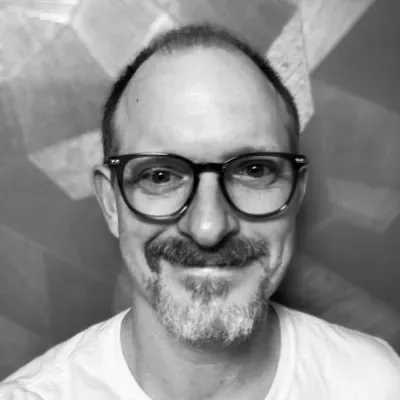
Christopher E. Carr is an Associate Professor at Georgia Tech in the Daniel Guggenheim School of Aerospace Engineering with a secondary appointment in the School of Earth and Atmospheric Sciences. His research focuses on developing space instrumentation for life detection, particularly using single-molecule technologies, and applying this to understanding the origin and limits of life and supporting a sustainable human future on and off Earth. He is a member of the Space Systems Design Lab (SSDL) and runs the Planetary eXploration Lab (PXL). He also serves as the co-director of the Georgia Tech Astrobiology Program.
He previously served as a Research Scientist at MIT in the Department of Earth, Atmospheric and Planetary Sciences and a Research Fellow at the Massachusetts General Hospital in the Department of Molecular Biology. He serves as a Scott M. Johnson Fellow in the U.S.-Japan Leadership Program. Recent service work includes advising NASA on space biology and astrobiology, and the National Academies on human Mars exploration.
Research areas: Space instrument development; space missions and systems seeking and supporting life beyond Earth, from microbes to humans; astrobiology, genomics; single-molecule detection; machine learning; microbial adaptation and evolution; origin of life; planetary protection. Human performance in extreme environments; bioastronautics; extravehicular activity (EVA); metabolism and aging.
Education
2005 ScD, Medical Physics, Harvard-MIT Division of Health Sciences & Technology, MIT
2001 SM, Aeronautics and Astronautics, MIT
1999 SB, Aeronautics and Astronautics (Minor in Economics), MIT
1999 SB, Electrical Science and Engineering, MIT
Academic appointments
2023–present, Co-Director, Astrobiology Program, Georgia Institute of Technology
2026–present, Associate Professor, Daniel Guggenheim School of Aerospace Engineering and School of Earth and Atmospheric Sciences, Georgia Institute of Technology
2020–2026, Assistant Professor, Daniel Guggenheim School of Aerospace Engineering and School of Earth and Atmospheric Sciences, Georgia Institute of Technology
2008–2020, Research Scientist, MIT Earth, Atmospheric and Planetary Sciences (EAPS)
2005–present, Research Fellow, Massachusetts General Hospital (MGH) Molecular Biology
2005–2008, Postdoctoral Associate, MIT EAPS and MGH Molecular Biology
1999–2005, Research Assistant, MIT Center for Space Research, Human Systems Laboratory (previously, Man-Vehicle Laboratory)
Awards and honors
- Jim Pope Faculty Fellow (2023), Georgia Institute of Technology
- Outstanding Achievement in Research Program Development (2023), Georgia Institute of Technology
- MIT Catalyst Fellow in Healthcare Innovation (2019)
- U.S.-Japan Leadership Program (USJLP) Delegate (2016–2017) and Fellow (2017–present)
- National Science Foundation Graduate Research Fellowship (1999–2002)
- MIT Presidential Graduate Fellowship (1999)
- MIT Aero/Astro Award for Excellence in Flight Vehicle Engineering (1999)
- Eagle Scout (1991)
Training and certification
- Zero-G Corporation Parabolic Flight Experiment (2009, 2017, 2019, 2021)
- Harvard Catalyst Medical Device Development Course (2015)
- MIT (Kauffman) Teaching Certificate Program (2014)
- Visiting Scientist (informal), Brookhaven National Lab, Radworker I Certification (2009–2013)
- NASA Planetary Protection Course (2006)
- NASA Aerospace Medicine Clerkship (audited) (2003)
- Central Clinical Hospital, Moscow, Russia, Rotation in Cardiac Surgery (2003)
- Russian Academy of Sciences, Space Biology & Medicine Course (2003)
- Clinical Rotation in Internal Medicine, Mount Auburn Hospital, Cambridge, MA (2003)
- NASA Planetary Science Summer School (2002)
- Paraglider pilot, P2 (novice) rating (2002)
- National Association of Underwater Instructors (NAUI) SCUBA Certified (2000)
- MIT Field Camp: Geologic Mapping of the Bird Spring Mountains (1999–2000)
- NASA Rapid Decompression Training and Parabolic Flight Experiment (1999)
- Private Pilot (Single Engine Land) (1995)
- High-altitude mountaineering (1995–present)
- Fieldwork: Active volcano, acid hot springs at Volcán Copahue, Argentina; Haughton Impact Structure, Devon Island, Canadian High Arctic; Atacama Desert, Chile (various years)
Publications
Full list | Google Scholar | ResearchGate
Eight selected publications (from 86 peer-reviewed papers and more than 250 other research products):
Carr CE. Resolving the History of Life on Earth by Seeking Life As We Know It on Mars. Astrobiology 2022, 22(7), 880-888 doi: 10.1089/ast.2021.0043. Preprint: arXiv: 2102.02362
Moore RA, Azua-Bustos A, González-Silva C, Carr CE. Unveiling metabolic pathways involved in the extreme desiccation tolerance of an Atacama cyanobacterium. Scientific Reports 2023 Sep 22;13(1):15767. doi: 10.1038/s41598-023-41879-8. PMID: 37737281; PMCID: PMC10516996.
Carr CE, Ramírez-Colón JL, Duzdevich D, Lee S, Taniguchi M, Ohshiro T, Komoto Y, Soderblom JM, Zuber MT. Solid-State Single-Molecule Sensing with the Electronic Life-Detection Instrument for Enceladus/Europa (ELIE). Astrobiology. 2023 Oct;23(10):1056-1070. doi: 10.1089/ast.2022.0119. Cover art by JL Ramírez-Colón.
McKaig JM, Kim M, Carr CE. Translation as a Biosignature. Astrobiology. 2024 Dec;24(12):1257-1274. doi: 10.1089/ast.2023.0101.
Duzdevich D, Carr CE, Colville BWF, Aitken HRM, Szostak JW. Overcoming nucleotide bias in the nonenzymatic copying of RNA templates. Nucleic Acids Research. 2024 Dec 11;52(22):13515-13529. doi: 10.1093/nar/gkae982. PMID: 39530216; PMCID: PMC11662926. Preprint: bioRxiv 10.1101/2024.09.03.610991.
Seager S, Petkowski JJ, Carr CE, et al. Venus Life Finder Mission Study. Preprint: arXiv: 2112.05153 (2021). Now published as a series of six journal articles in Aerospace, and follow-on articles in Astrobiology, Advances in Space Research, Scientific Reports, including: French R, Mandy C, Hunter R, Mosleh E, Sinclair D, Beck P, Seager S, Petkowski JJ, Carr CE, Grinspoon DH, Baumgardner D, on behalf of the Rocket Lab Venus Team. Rocket Lab Mission to Venus. Aerospace. 2022; 9(8):445. doi: 10.3390/aerospace9080445
Carr CE, Bryan NC, Saboda K, Bhattaru SA, Ruvkun G, Zuber MT. Nanopore Sequencing at Mars, Europa, and Microgravity Conditions. npj Microgravity 6, Article number: 24 (2020). Preprint available at: bioRxiv: 10.1101/2020.01.09.899716. Data: OSF: n6krq and OSF: nk2w4; Code: GitHub: CarrCE/zerogseq
L Wu, M Li, N Oshiro-Rapley, B Zhou, CM Webster, F Mou, MC Kacergis, ME Talkowski, CE Carr, B Zheng, AA Soukas. An Ancient, Unified Mechanism for Metformin Growth Inhibition in C. elegans and Cancer. Cell 167(7):1705-18, 15 Dec 2016; doi: 10.1016/j.cell.2016.11.055, PMC5390486 (2017/12/15).
Selected invited talks and panels
2025
Mentor and Subject Matter Expert, NASA Mission Ideation Factory, October 2025
Testimony for the Record, for the Hearing “Astrobiodefense: Biological Threats and the Next Frontier,” Bipartisan Commission on Biodefense, Washington, DC, May 8, 2025. doi: 10.17605/OSF.IO/S5VPD
2024
A Computational Astrobiology Strategy Derived from a Simple Definition of Life. Life and Space IV, December 5–8, 2024. Meeting website
Low Biomass Metagenomics and Implications for Planetary Protection. Planetary Protection: Metagenomics in Spaceflight: Establishing An Implementation Roadmap. NASA Ames Research Center, November 19–22, 2024. Invited virtual talk. Workshop website
Investigations before and during human exploration of Mars [invited panelist]. Science and Planetary Protection in Advance of Human Missions, October 30–November 1, 2024. Virtual. Workshop website
Seeking and Supporting Life Beyond Earth: Stories of Community, Selection, and Evolution. Astrobiology and the Future of Life, October 16–18, 2024, Houston, TX
2023
Mentor and Subject Matter Expert, NASA Astrobiology Mission Ideation Factory: The Search for Life on Mars
Seeking Life’s Polymers at Ocean Worlds. NASA Network for Life Detection (NFoLD) Think Tank, March 21, 2023. Video (YouTube)
Seeking Evidence of an Organic Carbon Cycle in the Venus Clouds. Venus Surface and Atmosphere Meeting, Decade of Venus Mission Panel. Video (YouTube)
Keynote Speaker, Brines Across the Solar System: Ancient and Future Brines Conference
2022
Invited Talk, SciX Conference, October 2–7
Kickoff Speaker, NASA Space Apps Challenge Hackathon, Boston/Cambridge, October 1
Keynote, Idaho Star Party, Boise Astronomy Society, September 23–24
Astrobiology Science Conference (invited talk and session convener), June
2021
Genes In Space Launchpad (invited keynote, July 27)
Europa Lander Pre-Project Workshop (invited lightning talk, May 20, 2021)
MIT Club of Southern California (invited speaker, March 21, 2021), Are We Martian? Event post (Facebook)
Exploration and Origins Colloquium, Georgia Tech (distinguished speaker, February 2021)
2020
Harvard Space Life Sciences Seminar (invited speaker, September 2020)
SpaceX Mars Exploration Workshop (invited participant/speaker, August 2020)
Exploration and Origins Colloquium, Georgia Tech (invited plenary speaker, January 2020)
23rd SANKEN International Symposium, Awaji, Japan (plenary speaker, January 2020)
2019
Long Distance Aerial Dissemination of Microorganisms (invited participant, September 2019)
Astrobiology Science Conference (invited talk, Astrobiological Technologies Session)
Astrobiology Science Conference (primary convener, In Situ Life Detection Session)
Accelerate, Wentworth Institute of Technology Incubator (invited talk, January 2019)
2018
Breakthrough Foundation, Spreading Life Workshop (invited participant, December 2018)
Europa Clipper Planetary Protection Workshop, Jet Propulsion Laboratory (external reviewer, November 2018)
SpaceX Mars Exploration Workshop (invited participant, August 2018)
SparkCamp, Harvard University (invited participant, June 2018)
National Academies Astrobiology Science Strategy (invited talk/panelist, April 2018)
2017
Christian Science Monitor: Search for Life Film and Panel (panelist, November 2017)
ELSI/EON International Workshop on Life Detection (invited speaker, October 2017)
Earth Life Science Institute (ELSI; invited speaker)
U.S.-Japan Leadership Program (USJLP; panel chair; invited speaker)
Osaka University (invited speaker; July 2017)
- NASA Open EVA Human Research Forum (invited speaker)
- Future In-Space Operations (FISO) (invited speaker)
Astrobiology Science Conference: Tiny Technologies (panel co-chair)
2016
Harvard Origins Initiative, Chalk Talk Seminar (invited speaker)
Center of Systems Medicine, Chinese Academy of Medical Sciences (invited speaker)
Cold Spring Harbor Asia: Microbiology and the Environment (invited speaker)
SPINDLE workshop on Cryobot Sub-surface Exploration of Icy Moons (invited speaker)
Pennsylvania Department of Health: The future of sequencing (invited speaker)
Microbes at the Interface of Land-Atmosphere Feedbacks (MILAF) (invited speaker)
2015
Students for the Exploration and Development of Space (SEDS) SpaceVision (invited talk, Origin of Life panel member)
DARPA Biology is Technology (BiT) New York (invited participant)
- DARPA Biocomplexity Workshop (lightning talk)
2014
MIT Museum Lecture Series: How to make life and influence planets
NSF Workshop: Microbes at the Interface of Land-Atmosphere Feedbacks (MILAF)
Louisiana State University (LSU) Department of Biology: The Search for Extra-Terrestrial Genomes (invited lecture)
American University: Is it time to search for life on Mars? (panel)
13th International Workshop on Radiation Damage to DNA (invited speaker)
Pennsylvania Department of Health: What does life on Mars have to do with public health?
Before 2014
Worcester Polytechnic Institute, Biomedical Engineering Seminar (2012)
MIT Lincoln Lab, Office of the Director Seminar Series (2011)
MIT150 Symposium on Earth, Air, Ocean and Space: The Future of Exploration; panel chair, organizer (2011)
NASA Workshop on Synthetic Biology, Ames Research Center (2010)
Teaching and mentoring
Teaching and curriculum
Space Instrumentation for Life Detection (AE/EAS 4803/8803 SLD): Georgia Institute of Technology (fall 2021, 2022)
Aerospace Technical Communication (AE 2611): Georgia Institute of Technology (spring 2021; fall 2021, 2022; summer 2023; spring 2025)
Planetary Spacecraft Development (AE/EAS 4803/8803 PSD): Georgia Institute of Technology (fall 2020, fall 2023, fall 2024, fall 2025)
Bioastronautics Seminar (AE/EAS 8801): Georgia Institute of Technology (fall 2024)
Introduction to Astrobiology Short Course: MIT Department of Earth, Atmospheric and Planetary Sciences, convener and lecturer in collaboration with Alexandra Pontefract and Roger Summons (2017)
Statistical Methods in Experiment Design: Taught MIT graduate course 16.470, guiding 15 students in developing and executing statistically based experiments culminating in oral and written reports (spring 2016).
Space Biology and Biomedical Engineering: Guest lecturer and course material development for multiple MIT courses. Delivered lectures on space radiation and biology and on space biomedical engineering. Wrote problem sets for two chapters of a textbook on aerospace design, Interactive Aerospace Engineering and Design (chapters on orbital mechanics and satellite systems engineering; Amazon listing). Contributor to the formation of, and informal advisor to, the Bioastronautics Program within the Harvard-MIT Program in Health Sciences & Technology (HST).
Curriculum Review: Member, Committee on Medical Education, Harvard-MIT Division of Health Sciences and Technology (HST); reviewed and authorized new curriculum (2003–2005).
Selected mentoring
Lab Research: Mentored or managed more than 100 students or staff members (2004–present), including 6 high school students, 67 undergraduate students, 21 graduate students, 8 postdocs, and 6 other staff.
NASA International Space Apps Challenge: Two-day global hackathon. Mentored multiple teams and supported the local Boston/Cambridge competition managed by Binnovative, Inc., with a special focus on enabling US–Japan collaborative teams (2015–2018; judge 2019–2021; invited speaker 2021–2022, 2024). In 2015, 64 participants spent 27 hackathon hours each creating 14 projects in hardware, software, data, and design. NASA selected one of the several joint US–Japan collaborative teams (ASTROM3D) as a top-5 global finalist for best use of hardware.
Air Spora Trapping & Recovery Operation (ASTRO): Mentored student team (2013–2014), undergraduates who developed and flew a payload on the High Altitude Student Payload (HASP), a NASA stratospheric balloon mission run by LSU.
Outreach via lectures, lab activities, special events, and social media: In 2016–2017, the lab engaged hundreds of students and members of the public through five school visits, including two by the Boston Public Schools with hands-on lab activities (adenosine triphosphate (ATP) detection, DNA extraction, and chiral chemistry via smell) centered around a “From Molecular Biology to Mars” theme, a booth at the Cambridge Science Festival (2016, 2017), and an MIT Museum series on “How to Make Life and Influence Planets,” among other outreach events.
Selected professional service
Proposal Reviewer for Federal Granting Agencies (12 panels to date, 2009–present).
Advisory Board Member, Binnovative Inc., a nonprofit organization that empowers joint US–Japan innovation through collaboration (2015–present).
Clay International Secondary School, Ngomano, Kenya: Volunteered to help start a high school in rural Kenya. It now has eight teachers and more than 100 students, who score in the top 5% nationally (2005–2008).
Global Service Learning: Worked with MIT Edgerton Center and MIT Public Service Center to provide opportunities for MIT students to pursue service, design competitions, and courses that serve communities in need (MIT D-Lab, MIT IDEAS) (2004–2006).