 Planetary eXploration Lab
Morning Star · Active
Morning Star
Morning Star missions to Venus: seeking evidence of a carbon cycle on Venus
Missions to Venus to search for organic chemistry or life in its clouds, starting with the Rocket Lab mission.
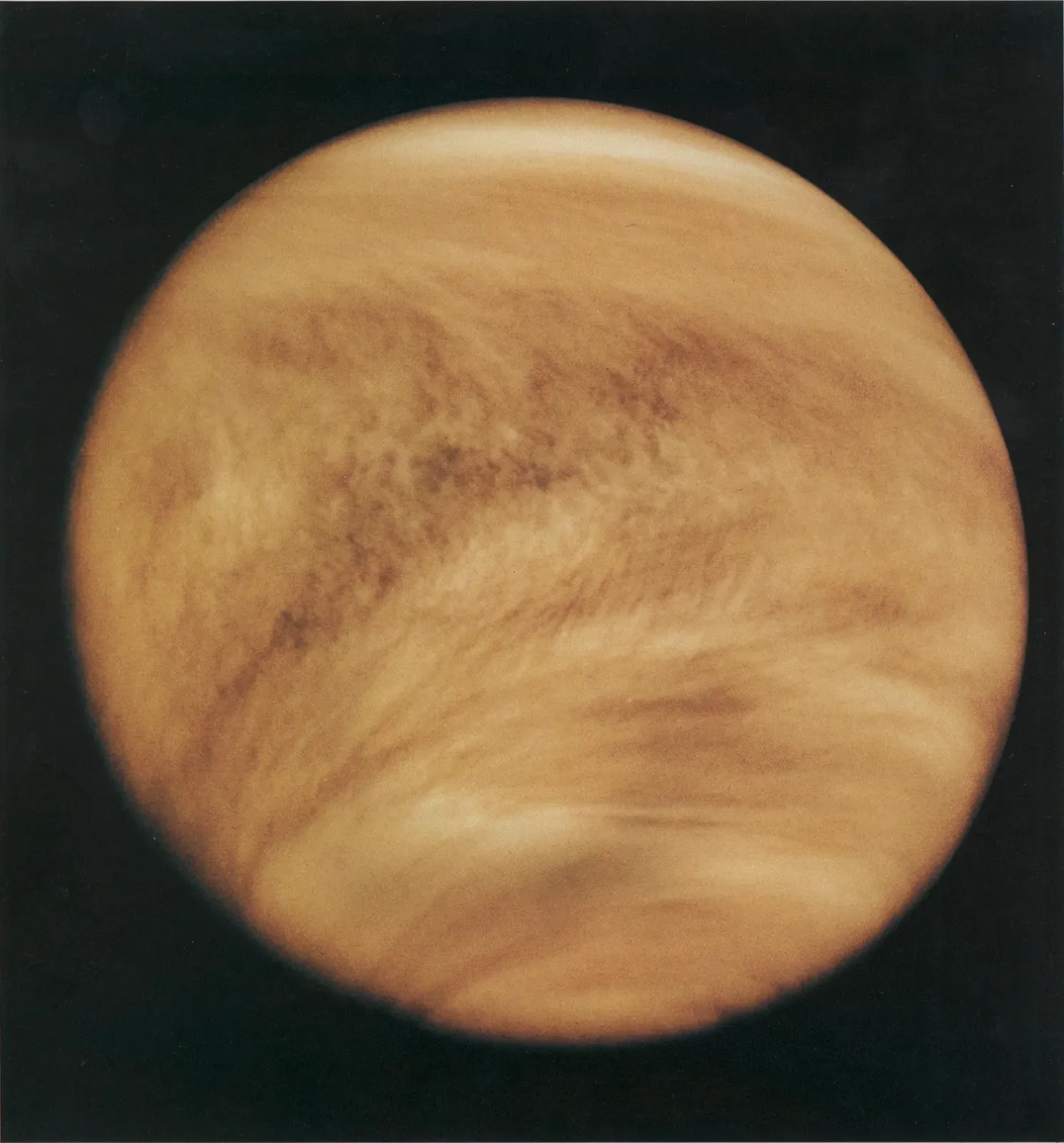
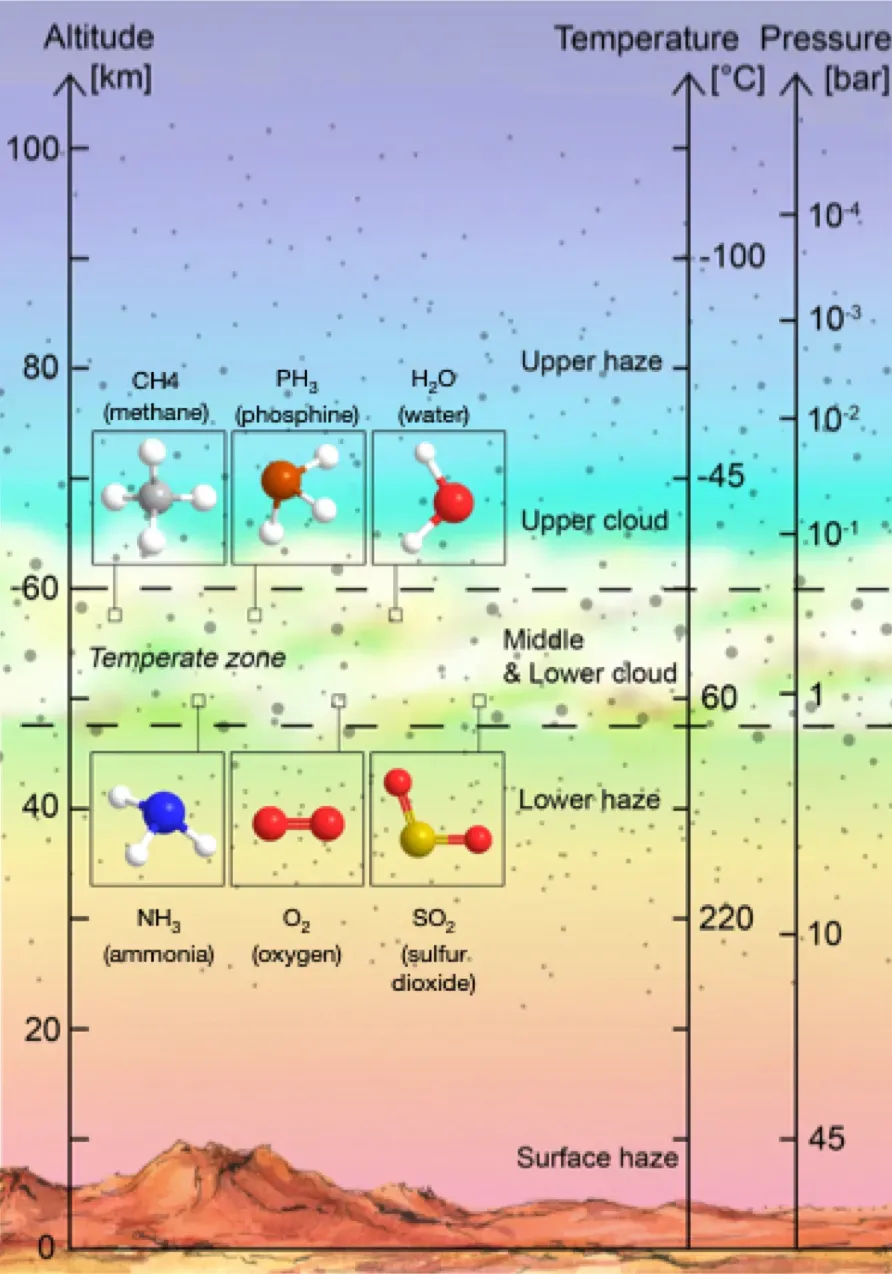
The discovery of organic chemistry or life in the clouds of Venus, the target of our Morning Star Missions, would transform our understanding beyond the dominant water-focused model of chemistry and life, and possibly address the eternal question, “are we alone?” The clouds are compelling because of habitable temperatures and pressures, as well as many atmospheric anomalies that together are suggestive of unknown chemistry and possible signs of life (see image). Yet, any such life would have to tolerate extreme acidity under conditions drier than any compatible with life as we know it.
Findings that break current paradigms: Contrary to standard views, we have shown that sulfuric acid can host a wide range of organic molecules [1], and some lipids can form vesicles at ≥70% sulfuric acid (see the Venus Life Finder Mission Study under Lab publications). Reanalysis of decades-old data revealed out-of-equilibrium chemistry and a potential nitrogen cycle [2]; also, locally produced ammonia (NH3) could neutralize the Venus sulfuric acid cloud droplets [3]. While debates over recent claims of phosphine [4] continue, phosphine is just one of many, and the newest, unexplained anomaly in the clouds of Venus. What are the limits of chemical complexity? Could life make water locally from gases? Can life adapt to conditions drier than currently known or in neutralized droplets? These are questions we seek to address via experiment, modeling, and in-situ measurement with essential new instrumentation recently built and undergoing validation.
First mission: Our first mission, to search for evidence of carbon chemistry in the Venus clouds, will be the first known private interplanetary space mission: the Rocket Lab Mission to Venus. A newly developed instrument called the autofluorescence nephelometer (AFN) is currently being validated for integration into the probe and Photon bus under development in preparation for launch. Follow-up missions (probe, balloon, culminating in a possible atmospheric sample return) are in development.
For more information: Morning Star Missions to Venus
Lab publications
- , , , , , , , , . Development of a data retrieval algorithm for Venus nephelometry in preparation for the Rocket Lab Mission to Venus. Icarus. 2026 May 23;459:117189. doi: 10.1016/j.icarus.2026.117189.
- , , . The Venus Clouds as an Astrobiological Target and Planetary Exploration Testbed. Request for Information: Development of NASA-DARES 2025 (NNH25ZDA002L). 2025 Mar 17.
- , , , , , , , , , , , , . Venus Cloud Sample Return Concept for Astrobiology. Adv Space Res. 2024 Jul;74(1):490–504. doi: 10.1016/j.asr.2024.03.065.
- , , , , , , , , , . Astrobiological Potential of Venus Atmosphere Chemical Anomalies and Other Unexplained Cloud Properties. Astrobiology. 2024 Apr;24(4):343–370. doi: 10.1089/ast.2022.0060. PMID: 38452176. arXiv: 2401.04708.
- , , , , , , , , , , , , . Venus Atmosphere and Cloud Particle Sample Return for Astrobiology: NIAC Phase I Study Final Report. NASA Innovative Advanced Concepts (NIAC) 2022 Phase I. 2023 Jan;(NTRS 20250005767). ntrs.nasa.gov
- , , , , , , , , , , . Venus Life Finder Habitability Mission: Motivation, Science Objectives, and Instrumentation. Aerospace (Basel). 2022 Nov 21;9(11):733. doi: 10.3390/aerospace9110733.
- , , , , , , , , , , , , , . An Experimental Approach to Inform Venus Astrobiology Mission Design and Science Objectives. Aerospace (Basel). 2022 Oct 13;9(10):597. doi: 10.3390/aerospace9100597.
- , , , , , , , , , , , , , . Deducing the Composition of Venus Cloud Particles with the Autofluorescence Nephelometer (AFN). Aerospace (Basel). 2022 Sep 2;9(9):492. doi: 10.3390/aerospace9090492. arXiv: 2209.02054.
- , , , , , , , , , , , . Rocket Lab Mission to Venus. Aerospace (Basel). 2022 Aug 13;9(8):445. doi: 10.3390/aerospace9080445.
- , , , , , , , , , , , , , . Venus Life Finder Missions Motivation and Summary. Aerospace (Basel). 2022 Jul 18;9(7):385. doi: 10.3390/aerospace9070385.
- , , , , , , , , , , , . Mission Architecture to Characterize Habitability of Venus Cloud Layers via an Aerial Platform. Aerospace (Basel). 2022 Jul 6;9(7):359. doi: 10.3390/aerospace9070359.
- , , , , , , , , , , , , . Venus Life Finder Mission Study. arXiv preprint arXiv:2112.05153. 2021 Dec. arXiv: 2112.05153.
Presentations and abstracts
- , , , , , , , , , . Optimizing Single-Particle Nephelometer Data for the Rocket Lab Mission to Venus. Astrobiology Science Conference, Madison WI. 2026 May.
- , . Seeking Evidence of an Organic Carbon Cycle in the Clouds of Venus: Preparing for the Rocket Lab Mission to Venus and Follow-on Missions. SANKEN Institute, Osaka University, Japan. 2025 Aug.
- , , , , , , , , , . Optimizing Nephelometer Data for the Rocket Lab Mission to Venus. Astrobiology Graduate Conference (AbGradCon), Boulder CO. 2025 Jun.
- , , , , , . Fluorescence Arising from Single Carbon Organics in Concentrated Sulfuric Acid. Astrobiology Science Conference, Providence, RI. 2024 May. agu.confex.com
- , , , , , , , , . Cloud Particle Data Retrieval Framework For The Rocket Lab Mission to Venus. 243rd AAS Meeting, New Orleans, LA. 2024 Jan. aas242-aas.ipostersessions.com
- , , , , , . Fluorescence Arising from Single Carbon Organics in Concentrated Sulfuric Acid. 243rd AAS Meeting, New Orleans, LA. 2024 Jan. aas242-aas.ipostersessions.com
- , , , , , , , , , , , , , . Science Preparation for the Rocket Lab Mission to Venus. 243rd AAS Meeting, New Orleans, LA. 2024 Jan.
- , , , , , , , , , . Single-Particle Mie Scattering and Measurement Modeling for the Rocket Lab Mission to Venus. 243rd AAS Meeting, New Orleans, LA. 2024 Jan. aas242-aas.ipostersessions.com
- , , , , , , , , . An Overview of the Science Objectives of the Rocket Lab Mission to Venus. Blue Sky, JPL-Caltech Workshop, Keck Institute for Space Studies, Pasadena, CA, . * MIT student. 2023 Aug.
- , , , , , , . Optimizing Aerosol Collection for Venus Atmosphere Sample Return. Blue Sky, JPL-Caltech Workshop, Keck Institute for Space Studies, Pasadena, CA. 2023 Aug.
- , , , , , , . Preparatory Laboratory Developments for Cloud Characterization during the Morning Star Missions to Venus. Blue Sky, JPL-Caltech Workshop, Keck Institute for Space Studies, Pasadena, CA, . * MIT student. 2023 Aug.
- , , , , , , , , , , . Seeking Evidence of an Organic Carbon Cycle in the Venus Clouds. Venus Surface and Atmosphere Meeting, Lunar and Planetary Institute, Houston, Texas (Decade of Venus Mission Panel). 2023 Jan. youtube.comVideo: youtube.com
- . Rocket Lab Venus Probe Engineering and Science Team briefing (invited participant). NASA Headquarters, Science Mission Directorate, Planetary Science Division. 2022 Nov 1.
- . Seeking our Origins on Mars and Expanding our Horizons at Venus. Georgia Tech Executive Round Table. 2022 Oct.
- . Seeking our Origins on Mars and Expanding our Horizons at Venus. Part I: Resolving the History of Life on Earth by Seeking Life As We Know It on Mars; Part II: Seeking Chemistry, and possibly Life, as we don't know it at Venus. Idaho Star Party, Boise Astronomical Society, Boise, Idaho. 2022 Sep 23.
- , , , , , , , , , , . Venus Atmospheric and Cloud Particle Sample Return for Astrobiology Investigations. Venus Science Conference 2022, Government of India. 2022 Sep. prl.res.in
- , , , , , , , , , , , . Deducing the Composition of Venus Cloud Particles with the Autofluorescing Nephelometer. Astrobiology Science Conference, Atlanta, GA. 2022 May;(Abstract 442-058). studio.m-anage.com
- , , , , , , , , , , , . Venus Life Finder Mission Study. Astrobiology Science Conference, Atlanta, GA. 2022 May;(Abstract 506-06).
- , , , , , , , , , , , , . Aerial Platform System Design for Finding Life at Venus. 18th International Planetary Probe Workshop (IPPW). 2021 Jul. drive.google.com
- , , , , , , , , , , , , . Mission Architecture Options to Explore Cloud Layer of Venus to Find Signs of Life or Life Itself. 18th International Planetary Probe Workshop (IPPW). 2021 Jul. drive.google.com
- , , , , , , , , , , , , . Venus Life Finder Mission Concept Study. 18th International Planetary Probe Workshop (IPPW). 2021 Jul. drive.google.com
Team publications
- Spacek J. Organic Carbon Cycle in the Atmosphere of Venus. arXiv. 2021. arXiv: 2108.02286.
- Mogul R, Limaye SS, Way MJ, Cordova JA. Venus' Mass Spectra Show Signs of Disequilibria in the Middle Clouds. Geophys Res Lett. 2021;48(7):e2020GL091327. doi: 10.1029/2020GL091327.
- Bains W, Petkowski JJ, Rimmer PB, Seager S. Production of ammonia makes Venusian clouds habitable and explains observed cloud-level chemical anomalies. Proc Natl Acad Sci U S A. 2021;118(52):e2110889118. doi: 10.1073/pnas.2110889118.
- Greaves JS, Richards AMS, Bains W, Rimmer PB, Sagawa H, Clements DL, et al. Phosphine gas in the cloud decks of Venus. Nat Astron. 2021;5(7):655–664. doi: 10.1038/s41550-020-1174-4.
Gallery