 Planetary eXploration Lab
NERPE · Completed
NERPE
Nonenzymatic RNA primer extension
How RNA could copy itself without enzymes, a key question for the origin of life.
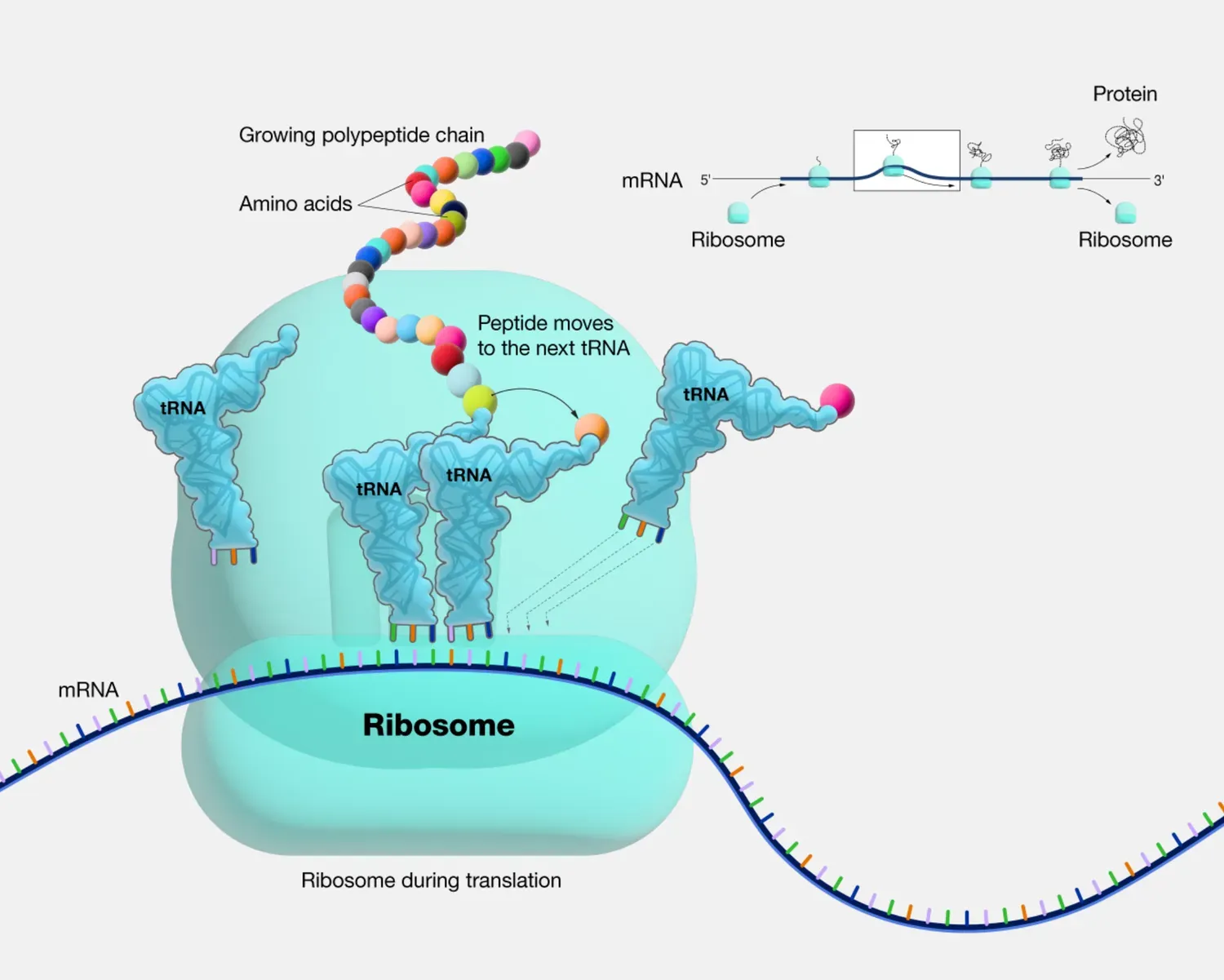
All known life is related to a common ancestor as evidenced by sequence conservation of nucleic acids, the basis for heredity and evolution. In modern life, DNA codes for RNA, which is translated into proteins that are the molecular machinery of a cell. This translation is performed by the ribosome, a molecular machine made of RNA, and later proteins, which provides evidence of an ancient RNA world that preexisted the DNA world. In such an RNA world, life would have had to evolve translation before proteins could be made, a classic chicken-and-egg problem. This implies RNA would have needed to copy itself in the absence of enzymes.
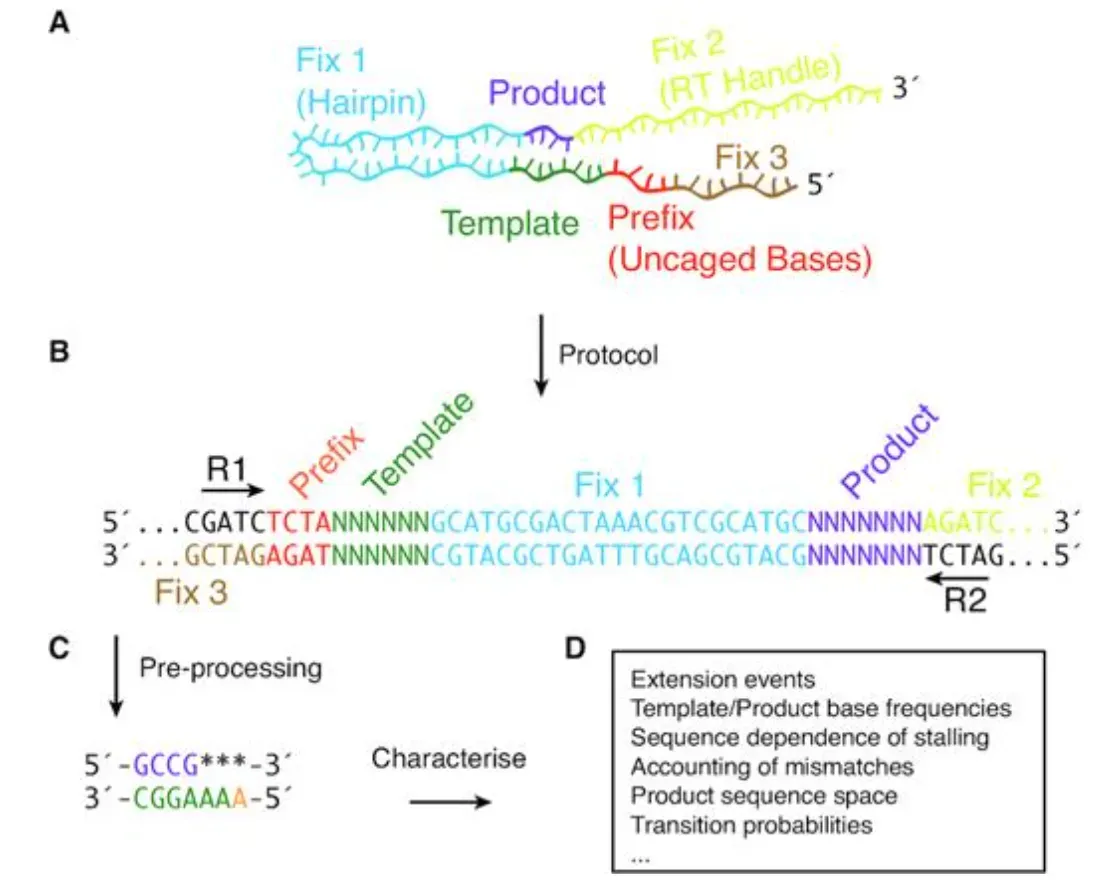
Nonenzymatic template-directed RNA primer extension is a model of the copying step in this posited form of replication. The sequence space accessed by primer extension dictates potential pathways to self-replication and, eventually, ribozymes (functional RNAs) such as the ribosome. Which sequences can be accessed? What is the fidelity of the reaction? Does the recently illuminated mechanism of primer extension affect the distribution of sequences that can be copied? How do sequence features respond to experimental conditions and prebiotically relevant contexts? To help answer these and related questions, we have introduced a deep-sequencing methodology for studying RNA primer extension. We are applying it to address these questions and assess the plausibility of non-enzymatic RNA copying in a planetary context.
[Some text above adapted from Duzdevich et al. 2020.]
Lab publications
- , , , , . Overcoming nucleotide bias in the nonenzymatic copying of RNA templates. Nucleic Acids Res. 2024 Dec 11;52(22):13515–13529. doi: 10.1093/nar/gkae982. PMID: 39530216. PMCID: PMC11662926.
- , , , . Freeze-thaw Cycles Enable a Prebiotically Plausible and Self-contained Pathway from Nucleotide Activation to Nonenzymatic Template-directed RNA Polymerization. bioRxiv. 2021 Sep. doi: 10.1101/2021.09.07.459201.
- , , , , , . Competition between bridged dinucleotides and activated mononucleotides determines the error frequency of nonenzymatic RNA primer extension. Nucleic Acids Res. 2021 Apr 19;49(7):3681–3691. doi: 10.1093/nar/gkab173. PMID: 33744957. PMCID: PMC8053118.
- , , . Deep sequencing of nonenzymatic RNA primer extension. Nucleic Acids Res. 2020 Jul 9;48(12):e70. doi: 10.1093/nar/gkaa400. PMID: 32427335. PMCID: PMC7337528.Code: github.com
Presentations and abstracts
- , , . Studying the Sequence Space of Nonenzymatic RNA Polymerization Using Deep Sequencing. 23rd SANKEN International Symposium, Awaji, Japan. 2020 Jan.
- , , . A Novel Approach to Studying the Sequence Space of Nonenzymatic RNA Primer Extension Using Deep Sequencing. Astrobiology Science Conference. 2019 Jun.
- , , . Studying the Emergence of Heredity at the Origin of Life: A New Deep-sequencing Analysis of Nonenzymatic RNA Primer Extension. Harvard Origins of Life Initiative, Spring Poster Session. 2019 May.
Gallery